Robotic Palletizer Buying Guide: 8 Critical Factors US Operations Managers Must Evaluate
Palletizing is one of the most physically demanding and repetitive tasks in any warehouse, distribution center, or manufacturing facility. For years, US operations teams managed it through labor — rotating workers through shifts, managing injury rates, and absorbing the inconsistency that comes with human fatigue. That approach is becoming harder to sustain. Labor availability has tightened across most US industrial regions, and throughput expectations have increased at the same time. The result is a growing number of operations managers evaluating automated palletizing systems for the first time.
This is not a simple equipment purchase. A palletizing system touches your production line, your floor layout, your downstream logistics, and your maintenance capacity. Getting the evaluation wrong — by focusing on price or speed without accounting for integration depth or operational fit — creates problems that persist for years.
Understanding What a Robotic Palletizer Actually Does in a Working Environment
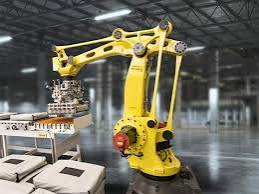
A robotic palletizer is an automated system that uses a robotic arm, typically mounted on a fixed base or gantry, to pick products from a conveyor or staging area and place them in a defined pattern on a pallet. Unlike conventional palletizers that use fix mechanical motions, robotic systems can be reprogram to handle different product types, stack patterns, and pallet configurations without physical retooling. This flexibility is one of the primary reasons they appeal to operations handling multiple SKUs or seasonal product variation.
For operations managers who want to understand how these systems are deploy across different facility types and throughput levels, reviewing robotic palletizer service documentation from experienced integrators gives useful context on the range of configurations in active use.
The Difference Between a Standalone System and a Line-Integrated System
Not all robotic palletizers function the same way within a facility. Some are installed as standalone units at the end of a single conveyor line. Others are integrated into multi-line operations, receiving product from several upstream sources simultaneously. The distinction matters because line-integrated systems require more sophisticated programming, more reliable upstream feed consistency, and more coordination during changeovers. A standalone installation is lower risk to commission but may not serve facilities where product comes from multiple points.
Understanding this early in your evaluation process prevents you from selecting a system that is technically capable but operationally mismatched for your floor layout.
Throughput Requirements and How They Translate Into System Specifications
One of the earliest mistakes operations managers make when evaluating palletizing automation is defining throughput too narrowly. They look at average output per hour and use that as the baseline. The problem is that average throughput and peak throughput are very different numbers. A system sized for your average rate will struggle or stop during your busiest periods, which are usually the periods where consistent output matters most.
Accounting for Variation, Not Just Averages
Before speaking with any equipment supplier or integrator, document your throughput pattern across a full production cycle — not just a single shift or a single week. Operations that run seasonal promotions, serve retail customers with strict delivery windows, or manage batch production will see significant swings. Your palletizing system needs to handle the high end of that range with margin to spare. Systems running at or near their rated maximum continuously experience higher wear rates and more frequent unplanned stops.
Product Characteristics and How They Affect System Selection
The physical properties of your products determine more about system selection than most buyers initially realize. A robotic palletizing system is only as reliable as its end-of-arm tooling — the mechanism that actually grips and places each unit. Tooling is designed around product dimensions, weight, surface texture, and structural integrity. A system that handles rigid corrugated cases cleanly may not be able to handle flexible film-wrapped bundles or fragile glass containers without significant tooling modifications.
Mixed-SKU Operations Require More Than Flexible Programming
If your facility handles a wide range of product types, you need a system capable of either rapid tooling changeovers or tooling designed to handle multiple product types without adjustment. Both approaches have trade-offs. Rapid changeover tooling reduces downtime between runs but adds mechanical complexity. Universal tooling reduces changeover time but may compromise grip reliability across the full product range. Understanding which trade-off fits your operation requires honest input from your production team about how often SKUs change and how much downtime is acceptable during transitions.
Floor Space, Layout Constraints, and Safety Zone Planning
Robotic palletizing systems require dedicated floor space that extends beyond the robot’s working envelope. Safety fencing, light curtains, or area scanners create a perimeter that personnel cannot enter while the system is running. In facilities where floor space is limited or layout is already fixed around existing conveyors and racking, these space requirements can become significant obstacles. Some operations have had to modify racking configurations or relocate equipment before installation could begin.
Safety Standards Are Not Optional and They Shape Installation Design
US industrial robot installations must comply with OSHA requirements and American National Standards Institute (ANSI) guidelines, specifically those relating to industrial robot safety standards. These requirements define minimum safety perimeter designs, emergency stop accessibility, and safeguarding methods. Integrators familiar with these standards will design installations accordingly, but operations managers should not assume compliance is automatic. Asking directly how a proposed installation addresses these requirements before signing anything is a reasonable and necessary step.
Integration With Existing Conveyor and Warehouse Management Systems
A robotic palletizer does not operate in isolation. It receives product from upstream conveyors and, in many operations, communicates with a warehouse management system that tracks pallet completion, initiates pallet transfer, or triggers label printing. How well the palletizing system integrates with your existing infrastructure directly affects how smoothly it runs after installation.
Communication Protocols and Data Exchange Capability
Modern robotic systems communicate through standard industrial protocols, but not all systems speak the same protocol, and not all warehouse management platforms accept direct input from equipment-level controls without middleware. Before selecting a system, your automation integrator and your IT or operations technology team need to confirm that data can flow reliably between the palletizer controller and your management platform. Assumptions made here become problems during commissioning, which is one of the most costly times to discover an incompatibility.
Maintenance Requirements and Internal Technical Capacity
Any automated system introduces a maintenance requirement that pure manual operations do not have. Robotic palletizers require scheduled preventive maintenance, periodic inspection of mechanical components, and occasional software or firmware updates. Whether your internal team can manage that work or whether you depend entirely on a service contract from the supplier or integrator affects both your operating cost and your response time when something goes wrong.
Building Internal Competency From Day One
Operations that treat automation as a black box — relying entirely on external technicians for every service event — find themselves at a disadvantage over time. Downtime during a service call that could have been resolved internally by a trained technician represents real cost. Insisting on operator and technician training as part of the installation contract is a reasonable requirement. The best integrators provide this as standard. Those who resist it should be evaluated carefully.
Total Cost of Ownership Beyond the Equipment Price
Purchase price is one line item in a much longer financial picture. Total cost of ownership for a robotic palletizing system includes installation and commissioning, integration work, tooling, safety infrastructure, operator training, ongoing maintenance contracts, consumable parts, and eventual software updates or system modifications as your production changes. Operations managers who evaluate systems on purchase price alone consistently underestimate the true financial commitment.
Evaluating Return on Investment Against Real Operational Baselines
A realistic return on investment calculation starts with an honest baseline of current costs — direct labor, injury-related costs, turnover and retraining expenses, and output inconsistency. Automation justification that relies on optimistic throughput projections or ignores integration costs produces a business case that does not hold up after installation. Grounding the ROI calculation in documented historical data from your own operation gives a much more defensible result.
Supplier and Integrator Qualification in the US Market
The robotic palletizer market in the United States includes both domestic integrators and international suppliers operating through US distribution networks. Evaluating the supplier or integrator is as important as evaluating the equipment itself. Installation quality, post-sale support responsiveness, spare parts availability, and the ability to send a technician to your facility when needed are all determined by who you choose to work with, not just which robot they sell.
Reference Checks and Site Visits Are Worth the Time Investment
Requesting references from facilities of similar size, product type, and operational complexity is a basic qualification step that many buyers skip to save time. A site visit to a reference installation provides information that no brochure or demonstration can replicate. Seeing how a system performs in a real production environment, speaking with the operations team that runs it daily, and observing how changeovers and maintenance events are handled will inform your evaluation in ways that technical specifications alone cannot.
Conclusion: Making a Decision That Serves Your Operation Long-Term
Selecting a robotic palletizing system is not a decision that benefits from speed. The operations managers who arrive at the best outcomes are those who spend time understanding their own operation before evaluating equipment — documenting throughput variation, mapping floor constraints, assessing internal maintenance capacity, and building an honest cost baseline.
The eight factors covered in this guide are not independent checkboxes. They interact with each other. A facility with complex product variety needs to think about tooling before it thinks about throughput. A facility with limited internal technical capacity needs to think about service agreements before it thinks about purchase price. Your evaluation should be structured around how these factors connect within your specific operational context, not how they appear in a supplier’s product sheet.
The goal of this process is not to find the most capable system available. It is to find the system that fits your operation reliably, operates within your maintenance capacity, integrates with your existing infrastructure, and delivers consistent performance over time. That is a narrower and more useful target than technical maximum capability, and it is the one that produces durable operational results.