The US Small Business Owner’s Guide to Choosing Pop Shop Displays That Don’t Waste Budget
Running a small retail operation or pop-up business in the United States means making purchasing decisions with limited room for error. Unlike large retailers with dedicated merchandising teams and bulk procurement budgets, small business owners typically invest in display systems once, use them repeatedly across multiple events or selling seasons, and expect them to perform consistently without ongoing replacement costs. When that investment doesn’t hold up — whether because a display arrives poorly constructed, doesn’t translate well to different environments, or fails to support the product being sold — the loss isn’t just financial. It’s also operational time, missed selling opportunities, and the hidden cost of starting the selection process over again.
The display market has expanded significantly over the past decade, and that breadth of options can make decision-making harder, not easier. Many small business owners end up choosing displays based on upfront price alone, without accounting for the full range of factors that determine whether a display actually earns its place in a business. This guide is written for owners who want a grounded, practical framework for making that decision well — before spending money they can’t recover.
Understanding What Pop Shop Displays Are Actually Designed to Do
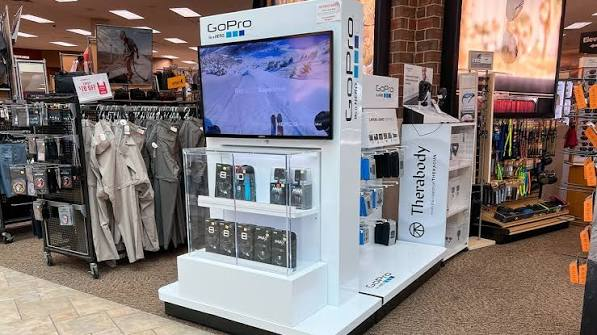
Pop shop displays are physical merchandising structures built for temporary or semi-permanent retail environments — including pop-up shops, market booths, trade events, seasonal storefronts, and in-store activations. Their core purpose is to present products in a way that supports browsing, communicates brand character, and makes a selling environment functional even in spaces that weren’t originally designed for retail. When researching options, many small business owners find it useful to browse structured resources like pop shop displays to understand the range of formats available and how they align with different selling contexts before committing to a purchase.
What distinguishes a display designed for pop-up or market use from standard retail fixtures is its transportability, setup time, and adaptability. These aren’t fixtures bolted to a floor or integrated into a permanent storefront. They need to be packed down, transported in a standard vehicle, set up by one or two people without specialized tools, and perform reliably across surfaces that range from concrete floors to grass to carpeted event halls. A display that works in one environment but fails in another creates a direct operational problem for a business that relies on consistent performance across different selling locations.
The difference between display types and why it matters for small businesses
Not all pop shop displays function the same way, and conflating different formats is one of the most common mistakes small business owners make early in the selection process. Some displays are primarily structural — they provide height, framing, and visual presence, but depend on additional accessories or materials to hold products. Others are fully functional out of the box, with built-in shelving, hooks, or hanging systems. Understanding which category a display falls into determines whether its listed price reflects its full cost or just the starting point.
A tabletop display, for instance, is typically compact and designed for smaller product volumes. It works well for jewelry, packaged goods, or accessories where the goal is close customer inspection. A freestanding grid or tower system offers more vertical presence and is better suited to high-volume, visually diverse inventory. Modular systems sit in a separate category altogether — they allow owners to reconfigure the layout across different events, which extends their usable life but also requires a higher initial investment and a learning curve during setup. Choosing the wrong type for the product and selling environment doesn’t mean the display is defective. It means it was the wrong tool for the job from the beginning.
How the Selling Environment Should Shape Your Display Decision
The physical conditions of where a business sells have a direct effect on which display formats are practical. Outdoor markets operate under different constraints than indoor trade shows. A weekend farmers’ market may involve uneven terrain, wind exposure, and rapid setup requirements that would disqualify certain display types regardless of their quality. An indoor boutique pop-up or retail activation typically offers more controlled conditions — level floors, climate control, and more time for setup — but introduces different constraints around footprint and brand presentation standards set by the host venue.
Outdoor conditions and structural reliability
Displays used outdoors need to account for stability in ways that indoor fixtures rarely require. Wind resistance, base weight, and ground anchoring all become relevant when a setup is happening in an open-air market or festival environment. Lightweight displays that pack down easily may be attractive from a transport standpoint, but if they can’t be stabilized adequately on soft or uneven ground, they become a liability rather than an asset. Some display systems are designed with weighted bases or ground stake compatibility specifically for outdoor use. Others are not, and that distinction is rarely highlighted in product listings.
Small business owners who sell regularly at outdoor markets should treat structural stability as a baseline requirement, not an optional feature. A display that tips, shifts, or requires constant adjustment during a selling day diverts attention from customers and creates a safety concern in crowded environments. According to general product safety standards maintained by the U.S. Consumer Product Safety Commission, temporary display structures used in public environments are expected to remain stable under normal conditions of use — a standard worth keeping in mind when evaluating less expensive options that may not meet basic stability criteria.
Indoor events and venue-specific constraints
Indoor selling environments introduce a different set of considerations. Venue operators often restrict the height of displays, prohibit floor damage from certain base types, and require that setups stay within a clearly defined booth footprint. These restrictions aren’t always communicated clearly until setup day, which means displays purchased without accounting for flexibility can create compliance problems at the worst possible moment. Modular systems that can be configured at different heights or widths give small business owners more room to adapt on-site, reducing the risk of arriving at an event with a display that can’t legally or practically be used as intended.
Evaluating Build Quality Without Overpaying for Features You Won’t Use
Build quality in display systems is one of the more difficult factors to assess without handling a product in person. Marketing descriptions tend to overstate durability, and product photography doesn’t communicate how a frame connects, how joints hold under repeated use, or how materials respond to packing and unpacking over time. Small business owners who purchase displays based entirely on online listings often discover that the product performs adequately in the short term but degrades noticeably after a season of regular use.
What repeated use actually does to display structures
A display that travels to ten events per year is being packed, transported, unpacked, assembled, and disassembled far more often than most buyers initially account for. Connection points are the most vulnerable part of any portable display system. Hinges, clips, snap-locks, and sleeve joints are subjected to stress every time the display is assembled and broken down, and cheaper versions of these components show wear quickly. Once a connection point fails, the display either becomes unstable or unusable, and replacement parts are often unavailable for lower-cost products sold through general retail channels.
Evaluating connection quality before purchase, when possible, is worth the effort. Trade show sample displays, local maker markets, and supplier showrooms occasionally offer the opportunity to inspect systems in person. When that’s not possible, detailed review sourcing from small business communities and vendor forums tends to provide more honest assessments than product listings. Looking specifically for feedback from owners who have used a display across multiple seasons gives a more accurate picture of long-term reliability than reviews written shortly after initial purchase.
Separating essential features from unnecessary complexity
Many display systems are sold with feature sets that add cost without adding meaningful value for small business operations. Branding panels, custom print options, and integrated lighting are regularly marketed as standard components of premium display packages, but for many small business owners, these additions don’t improve sales performance enough to justify their cost. A well-organized, clearly visible product display typically outperforms an elaborate presentation that overwhelms or distracts customers in a busy event environment.
The practical starting point is to define the minimum feature set that allows the business to sell effectively — adequate product visibility, appropriate footprint, stable structure, reasonable setup time — and then evaluate whether any additional features serve a documented purpose rather than simply being available. Restraint in feature selection is one of the more reliable ways to avoid budget waste in this category.
Managing Total Cost Across the Display’s Useful Life
Purchase price is the most visible cost associated with display selection, but it rarely reflects total cost when measured over the display’s working life. Shipping, accessories required to make the display functional, repair materials, replacement components, and the cost of eventually replacing a failed unit all contribute to what a display actually costs a business over time. Cheap displays that require replacement after one season can ultimately cost more than mid-range systems that perform reliably across several years of regular use.
Small business owners who track their event-related expenses carefully often find that display costs sit higher in their operational budget than initially anticipated, particularly when replacement cycles are short. The most budget-conscious approach is not necessarily to buy the least expensive option but to buy the option most likely to remain functional through a reasonable number of selling seasons without requiring significant additional investment. That calculation requires some initial research, but it typically produces a better financial outcome than defaulting to the lowest listed price.
Conclusion: A Deliberate Purchase Is a Protected Investment
Choosing the right display for a small retail or pop-up operation isn’t a complicated decision, but it is one that benefits from deliberate thought before purchase. The businesses that consistently get value from their display investments tend to start from a clear understanding of where they sell, what their product requires, and how often their setup will be used across different conditions. They don’t base the decision on price alone, and they don’t add features that serve no operational purpose.
Budget waste in this category almost always comes from the same sources: displays chosen without accounting for the selling environment, low-cost options that don’t survive repeated use, and feature sets purchased without a clear reason for needing them. Addressing each of those points before making a purchase doesn’t require a large amount of time or expertise — it requires asking direct questions about how the display will actually function in practice, not how it appears in a product listing. For small business owners working with limited capital and limited margin for error, that discipline is one of the more straightforward ways to protect spending that matters.